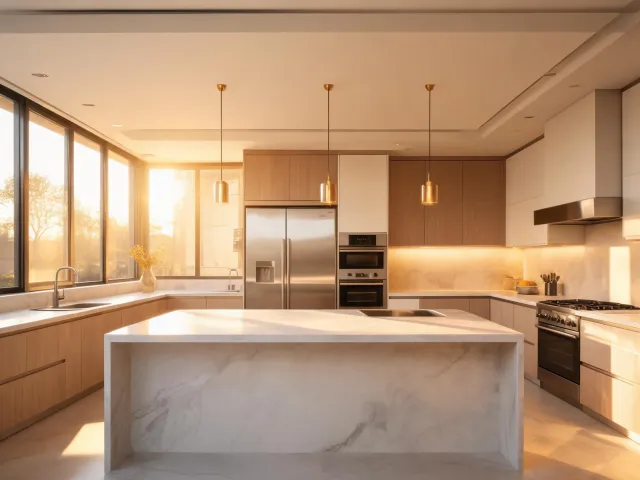
Custom Residential Kitchens
Homeowners compare natural stone drama against engineered consistency. Hanstone Quartz delivers veining options with water absorption typically under 0.5% and NSF food-safe surfaces for daily cooking zones.
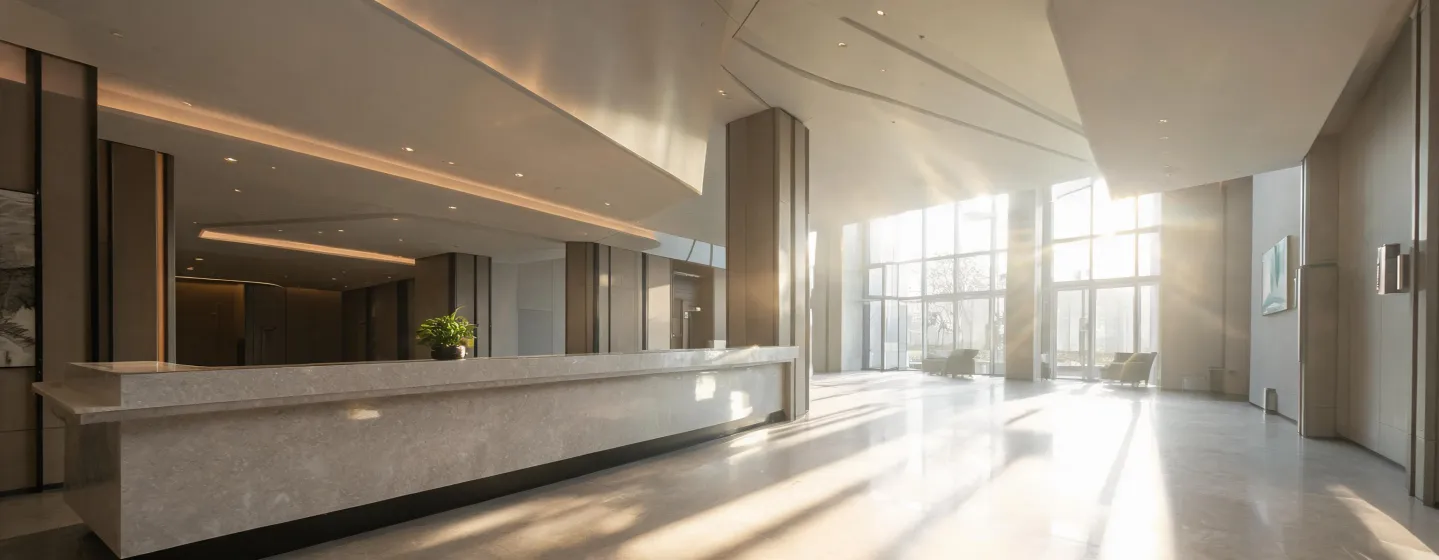
Engineered quartz programs for residential kitchens, multifamily baths, hospitality bars, and healthcare reception—where stain resistance and dimensional stability protect long-term maintenance budgets.
Each application below reflects how designers and fabricators actually specify Hanstone Quartz—not generic “any industry” filler copy.
Homeowners compare natural stone drama against engineered consistency. Hanstone Quartz delivers veining options with water absorption typically under 0.5% and NSF food-safe surfaces for daily cooking zones.
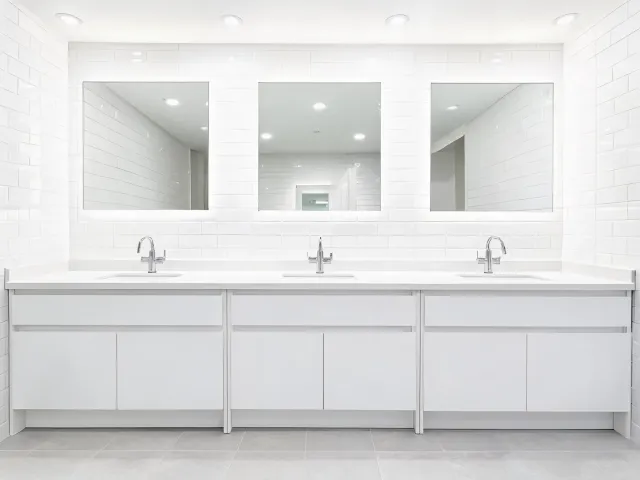
Repeating bath tops need lot consistency and abrasion resistance that survives tenant turnover. GREENGUARD Gold documentation supports indoor air goals without inflating green premiums beyond project budgets.
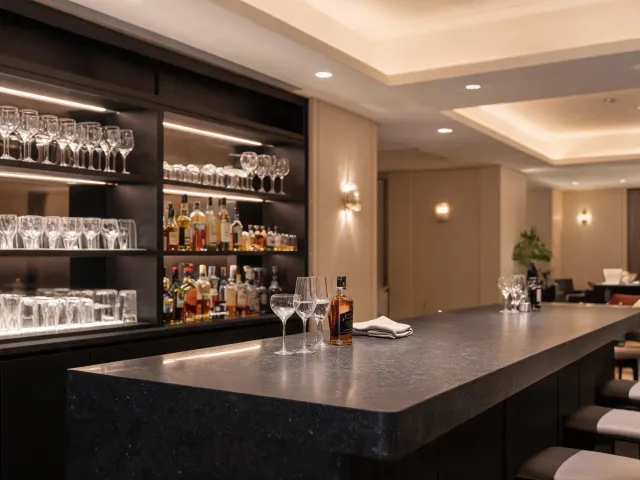
Front-of-house counters face spills, luggage impacts, and constant cleaning chemicals. Flexural strength notes and impact resistance guidance help fabricators protect high-traffic edges.
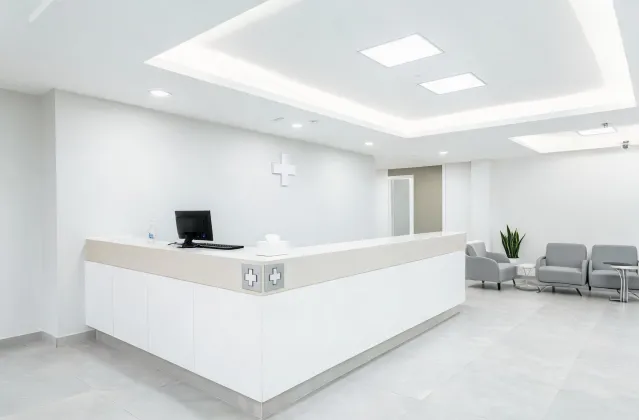
Clinics need wipeable surfaces with low VOC emissions and predictable maintenance. Hanstone Quartz helps teams document food-adjacent and waiting-area use cases without overstating medical-grade claims.
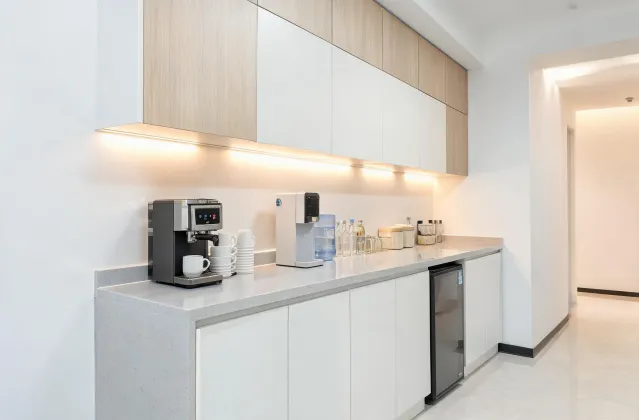
Office kitchens see microwave heat, coffee stains, and weekend cleaning crews. Specifying engineered quartz with clear care language reduces lifecycle complaints versus porous natural stone.
Two debates show up on almost every Hanstone Quartz package: natural stone versus engineered surfaces, and green documentation premiums versus budget pragmatism. We present both sides so purchasing and design can decide with the same facts.
| Decision factor | Natural stone (granite / marble) | Engineered quartz (Hanstone path) |
|---|---|---|
| Aesthetics | One-of-a-kind veining; higher perceived uniqueness | 130+ colorways with lot-controlled consistency across repeats |
| Maintenance | Sealing cycles; etching risk on marble from acids | Lower porosity (water absorption typically <0.5%); still needs heat pads and approved cleaners |
| Performance data | Varies by quarry lot; less slab-to-slab predictability | Abrasion resistance, flexural strength, compressive strength class (~7,000 PSI typical—confirm TDS), VOC emissions sheets |
| Green / budget tension | Authenticity argument; sealing chemicals and transport still matter | GREENGUARD Gold / recycled-content notes where applicable; do not invent LEED points when the budget cannot absorb premiums |
For residential kitchens, ask whether islands and perimeter runs must share a continuous pattern; if yes, we hold slab lots and plan seams before fab starts. For healthcare reception and workplace pantries, prioritize wipeable surfaces with documented VOC emissions rather than decorative stone that needs sealing cycles. Prefabricated vanity pods can accelerate multifamily schedules, but field-measured custom tops still win when existing rough-ins vary—share which path your GC already locked.
Application limits: Hanstone Quartz interior programs are not a substitute for outdoor-rated materials unless a specific collection is approved for UV exposure; hot cookware, thermal shock, and abrasive powders remain misuse risks that shorten service life expectancy. Share unit counts, bar lengths, sink types, and cleaning protocols. We return collection shortlists—Montauk, Matterhorn, Tranquility, or Chantilly—matched to abrasion resistance needs, edge profiles, and dealer coverage so fabricators inherit actionable notes instead of vague mood boards. Verification path: free chip samples, large-format boards, and fabricator consults against the current technical data sheet.
Share unit counts, bar lengths, or kitchen square footage. We will recommend collections and dealer partners experienced with your application.
Get a Quote